Some individuals confuse kindness and empathy with weakness. But when a teenager’s reputation was challenged, a father’s response revealed a deeper truth about trust, boundaries, and the need to protect young people from emotional exploitation.

Dear Bright Side,
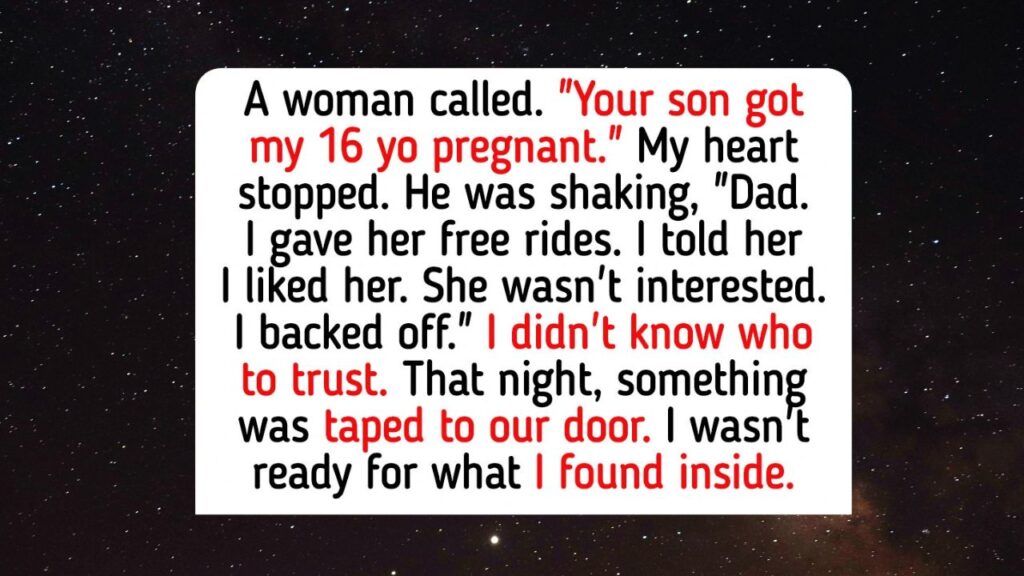
I received a call that no parent wants to hear. A woman claimed that my son had gotten her daughter pregnant. My heart sank. When I looked at him, he was visibly shaken but insisted it wasn’t true.
“Dad, she’s from my class. I used to give her rides after school. I liked her, told her honestly, but she wasn’t interested. I respected that and stepped back.” I stood there unsure of what to believe. Later that night, something was left at our door.

Inside was a formal request for a DNA test, sent through a lawyer. I showed it to my son. He remained calm and said, “Let’s do it. I want the truth to be clear.”
We completed the test immediately. When the results came back, they confirmed he was not the father. It turned out the situation involved someone else entirely. His only mistake had been showing kindness to the wrong person.
I called the girl’s mother and read the results clearly. She went silent before offering an apology. My son heard everything but said nothing. Later, he asked me quietly if he had done anything wrong.
I told him the truth. “You offered your time and your feelings sincerely. Someone chose to misuse that. That responsibility is not yours.”
That night, I reflected on how easily goodness can be misunderstood. Kindness is not weakness, but it can make someone vulnerable when placed in the wrong situation.
This experience could shape him in different ways. It could make him distant and distrustful, or it could make him wiser and more aware. The goal is not to lose kindness, but to pair it with boundaries.
Here are key lessons from this situation:
Understand the difference between kindness and overgiving.
Helping others is positive, but continuously giving time, effort, and emotional energy without balance can lead to being taken advantage of.
Do not mistake access for connection.
Just because someone accepts help does not mean they share the same feelings or intentions. Time spent together does not always equal mutual understanding.

Create distance after rejection.
Remaining too available can lead to emotional attachment without clarity. Stepping back helps maintain self-respect.
Respond to serious claims with facts.
In critical situations, evidence matters more than emotions. Staying calm and focusing on truth protects both reputation and credibility.
Recognize one-sided patterns.
If someone only approaches when they need help but offers nothing in return, it signals an imbalance. Awareness of such behavior is essential for healthy relationships.
Your son did not act wrongly. But this moment is an opportunity for growth. The lesson is not to stop caring, but to understand where and how to invest that care.
As a parent, your role remains crucial in guiding him toward maintaining both integrity and self-worth while navigating complex human interactions.