The best kind things don’t always make a big deal out of themselves. They come in quietly, like a container left on a doorstep, a recipe learned in secret, or a meal made for someone who didn’t know they needed it. These real-life stories show that food has always been one of the most honest ways for people to show kindness. This is not because it’s easy, but because it takes someone to stop, think about someone else, and decide that being there is more important than saying the right thing. These are the real things that happened when someone decided to cook instead of leave.
At every family get-together, my sister-in-law cooked and made sure everyone knew it. “Let me take care of the kitchen,” she’d say, pushing me out before I could touch anything. For three years, I smiled and sat down.
She had twins after that and couldn’t host. My brother called and asked if I could take over Christmas dinner because he was worried. I agreed. I got ready for two weeks.

When I opened her recipe binder to use her kitchen that day, I was shocked to find a note inside the front cover that said, “I’ve been keeping you out of the kitchen because I was jealous.” It was written months before the twins. You now own all of these. “I always knew you were the better cook.”
My brother didn’t know she had written it. Not me, either, until Christmas morning.
While I was getting chemotherapy for about six months, I couldn’t cook at all. I couldn’t even make something simple because I would get dizzy if I stood for too long. I had always been the one to make meals before that. My stepkids (12 and 14) never really helped in the kitchen. It wasn’t because they were mean; we just didn’t have that kind of bond.
When I came down the stairs one night, I saw that the kitchen light was on right away. I almost thought I had forgotten to turn it off, but then I heard something move. I walked in and saw both of them at the stove, very focused and not talking much, as if they were afraid of making a mistake.
There was an old recipe card on the counter. Written by hand. I picked it up, and I swear my stomach dropped a little when I saw it was in their mom’s handwriting. Their real mom died about two years ago. I had seen her writing on some old things around the house before.
Turns out they’d found her recipe box while digging through storage. They chose the easiest recipe on purpose, saying they thought it would be the safest one to try. They didn’t make a big deal out of it and didn’t really look at me. They just kept cooking.
We mostly ate in silence. The food wasn’t great, but that was okay. That night was… different. It felt like something changed between us. I can’t really explain it, but things weren’t as far away after that.
In one week, my husband said the name of a coworker twice. I waited three days before checking his phone. There were dozens of messages from the last four months. I kept reading, but when I got to the part where she said, “Don’t tell her—just bring the vanilla and I’ll show you the rest,” I got cold.
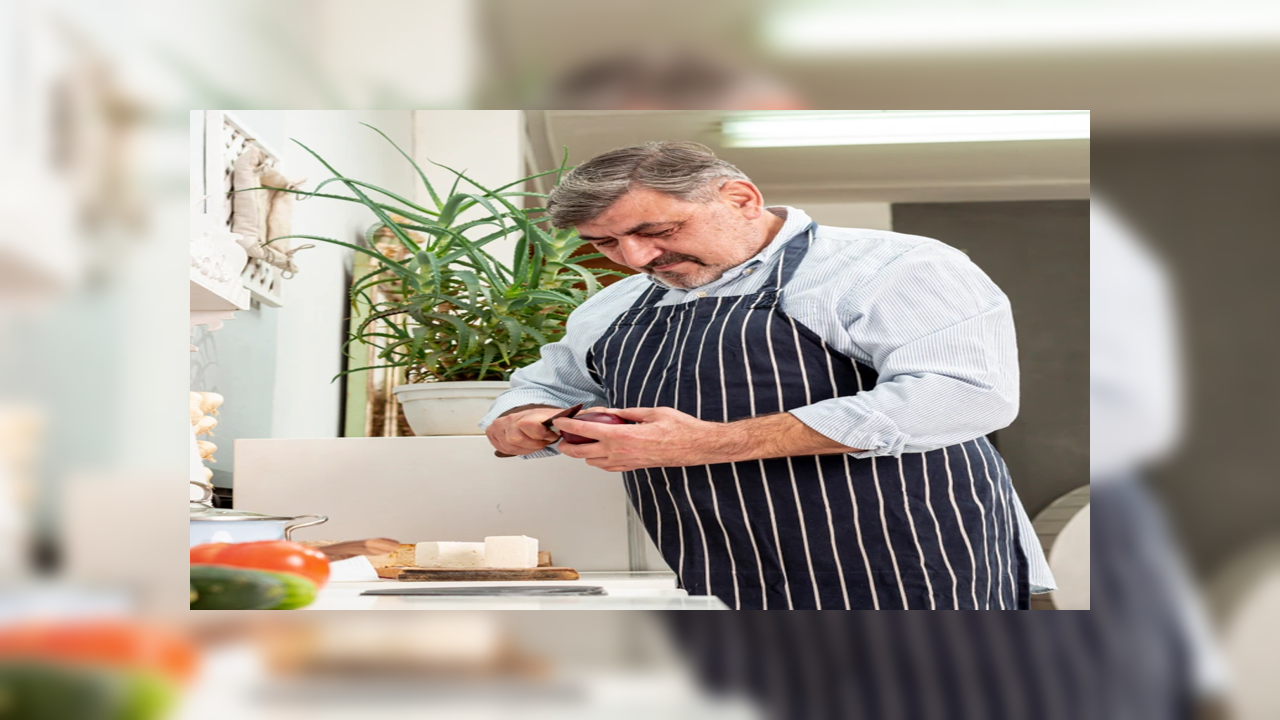
She used to be a pastry chef, and she was teaching him how to make our wedding cake from scratch for our anniversary. He made her promise not to tell anyone. We had already put the cake in the freezer in our basement, wrapped in foil.
My stepdad wouldn’t eat what my mom made. He pushed away every meal she made from our culture without tasting it. He would say, “I don’t eat that.” She stopped cooking it altogether, and I hated him for years.
I moved out, came back for Christmas, and when I walked into the kitchen, it smelled like my childhood. I followed the smell and stopped at the door when I saw my stepfather standing at the stove, phone propped up, trying to make my mother’s most difficult dish from scratch while watching a video in a language he didn’t understand.
He had been learning in secret for six months. Most of what he said was wrong. She still cried.
Since then, they’ve made it together every Sunday, and he’s almost got it right.
My stepmom never made the same meals as my mom. I never told her to. I told myself I was okay with it when those dishes went missing after Mum died.
Last winter, I got sick. It wasn’t serious, but it was the kind of sick where you want one thing and nothing else will do. That night, my stepmom came to my door, sat on the edge of my bed, and asked in a very quiet voice if I would be willing to write down what I remembered of the recipe—just the parts I could remember—so she could try it.
I wrote half a page of instructions that weren’t finished and then went to sleep. At midnight, she was still in the kitchen. The next morning, what she brought me wasn’t perfect. It was close enough to be important.
My husband smelled like garlic bread when he came home on Thursdays for months. He said he was going to work late. One night, I followed him to a house I didn’t know.
A woman answered the door and said, “You must be the wife,” while wiping flour off her hands. Come in; he’s been secretly learning how to make your mother’s dish. He found her old friend on Facebook and has been coming every week since.
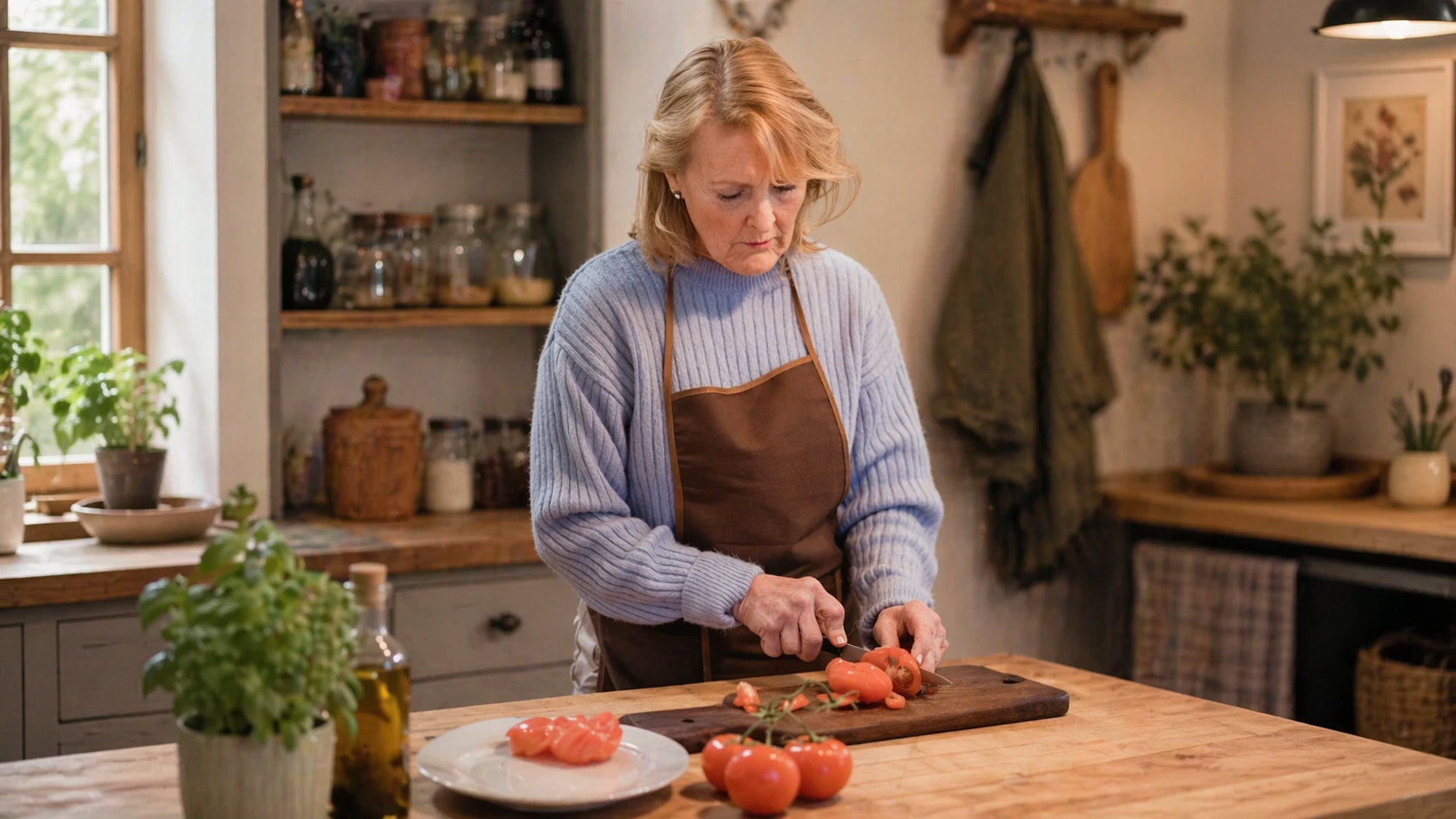
My mother had died the year before and taken the recipe with her. He was in the kitchen, covered in flour, and very embarrassed. I cried before I could say anything.
When my dad died, my stepmom pretty much stopped cooking. It didn’t happen all at once; it just… faded away. For three years, there was cereal, takeout, frozen meals, and a lot of quiet.
The house didn’t smell like food anymore when I came over, and instead of talking, we would sit at the table with the TV on. I didn’t come as often after a while. Not because I didn’t care, but because it felt like the whole place was frozen in time when he died.
She called last winter and asked me if I wanted to come over for dinner on Sunday. No reason to celebrate. Only dinner. That alone felt strange because she hadn’t made a real meal since Dad died.
The first thing I noticed when I walked in was the smell. Cooking for real. The kind I was raised with. I walked into the kitchen and stopped. She was at the stove making my dad’s recipe, the one he made every Sunday and that none of us thought she knew how to make.
I asked her where she got it from, and she said she saw it in one of his old notebooks. She then told me that she had been practicing it for months and had messed it up many times because the house felt too quiet without it. She said she wanted at least one thing on the table that reminded her of him.
We didn’t talk much while we ate. It tasted very similar to his. Before I left, she said, “You can come next Sunday too.” I did. Since then, I’ve been coming every Sunday.
Three weeks after I buried my husband, the fridge was empty, and I didn’t care. Our 81-year-old neighbor knocked on the door on a Tuesday morning and gave me a pot without saying anything. “Eat,” she said. That was it. I almost didn’t.
On the fourth Tuesday, she came in, sat down at the kitchen table while I ate, and said something that made me stop eating. She said, “He asked me to.” “About a month ago.” He knocked on my door and said he was worried about who would make sure you ate.
He had quietly planned it out while he still had time. She came every Tuesday for the rest of the year.
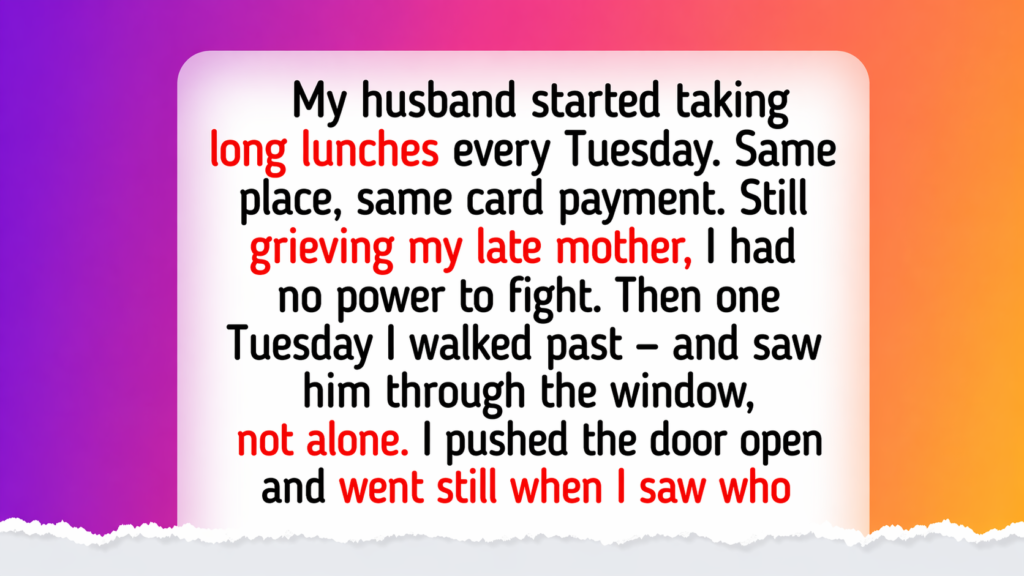
Every Tuesday, my husband started taking long lunches. Same place, same way to pay with a card. I couldn’t fight because I was still grieving for my mother. Then on a Tuesday, I walked by and saw him through the window. He wasn’t alone.
I pushed the door open and stopped when I saw who was sitting across from him. It was my late mother’s best friend, a retired chef, with a notebook open between them. Since the funeral, he had been paying her to teach him my mother’s whole recipe book every Tuesday. He hadn’t told me because he wanted to finish it first, and it had been three months.
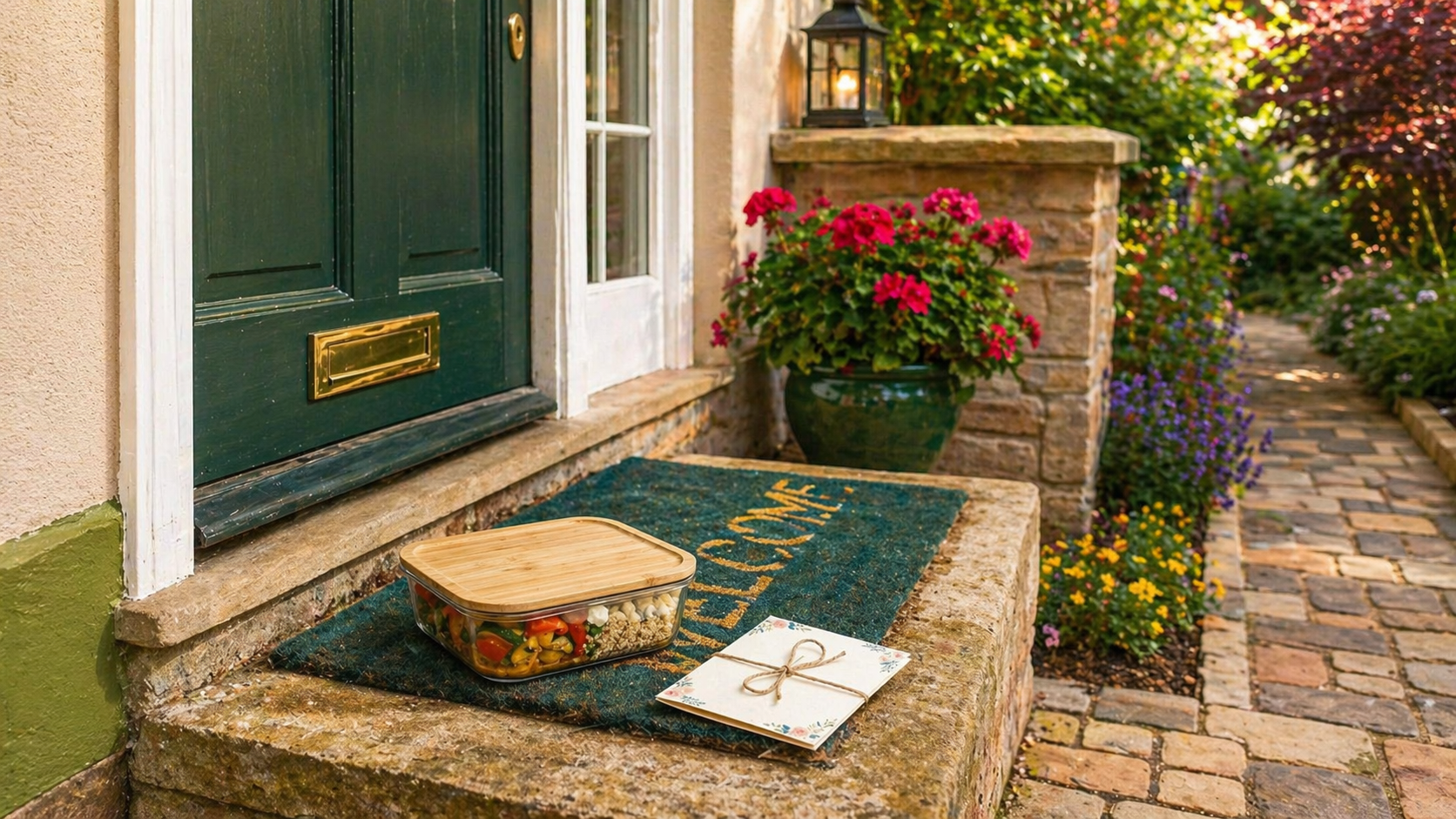
I completely shut down after my stillbirth. I wasn’t responding to messages, leaving the apartment, or talking to anyone very much. A few days later, I found food outside my door. I thought it was my neighbor from across the hall because we had talked a few times before.
There was something new, still warm, left quietly on the mat every day. I never opened the door while it was going on. Later, I just brought the containers inside and didn’t say anything. It lasted for about two weeks.
I finally opened the door one night when it was still light out. There was no one there. There was only a pot and a small card under it. I picked it up, expecting to see her name, but the card had a list of names instead.
Every woman who lives on our street. Fourteen names. Some of them I didn’t know very well. There was a short note next to each one that said, “Thinking of you,” “No need to answer,” or “Take your time.”
They would take turns bringing me food every day without saying a word. This way, I didn’t have to talk to anyone if I didn’t want to. I sat down right there on the porch and read the list twice. That was the first time since everything happened that I didn’t feel completely alone.
When I was diagnosed, my sister-in-law stopped coming over. She said, “Too hard to watch.” I didn’t have the strength to fight it.
Every Thursday for the next six months, a meal came with a note that said, “Take care of yourself.” No sign. I looked at the security camera and froze when I saw it was her. She parked around the corner so I wouldn’t see the car and left before I could open the door.
She never said it. I never said anything about it. The food kept coming until I was full.
That was three years ago, and we’ve never talked about it.