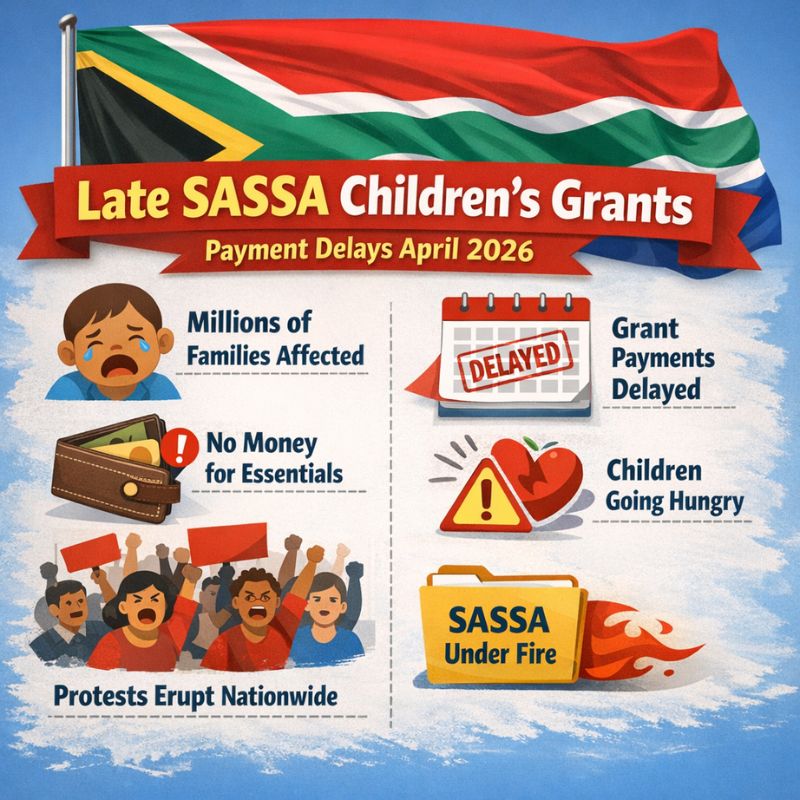
The delay in SASSA Children’s Grants for April 2026 has sparked frustration among beneficiaries and social welfare observers, many of whom believe the issue could have been avoided with better planning.Under the usual payment pattern, Children’s Grants should have been paid on the first Thursday of the month, which in this case fell on Thursday, 2 April 2026. However, the approved 2026/27 payment schedule moved these grants to Wednesday, 8 April 2026.This unexpected shift means millions of households that rely on these grants will face a longer gap between payments and may struggle through the Easter long weekend without support.
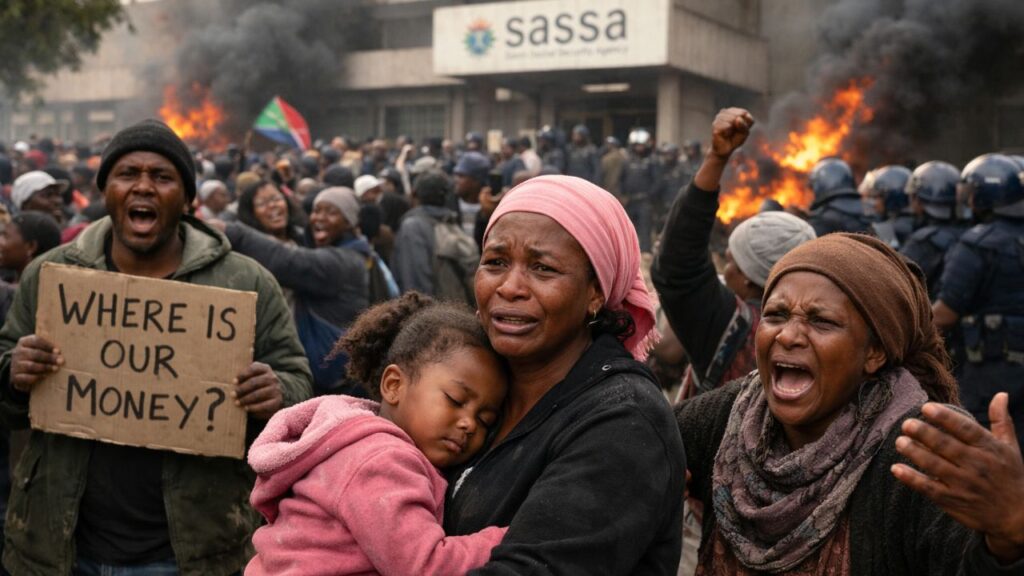
Millions of Beneficiaries Affected by the April 2026 Delay
The payment delay affects around 13 million Child Support Grant households, along with another one million beneficiaries receiving Foster Child Grants and Care Dependency Grants.
For many families, the timing could not be worse. With Easter falling before the revised payment date, beneficiaries may be left without enough money for transport, food, and other essentials during the holiday period.

Some readers have already shared how this delay will impact them. One beneficiary explained that her family may not even be able to attend church over Easter because they cannot afford taxi fare.
Why the April 2026 Payment Schedule Has Caused Concern
Observers note that Children’s Grants are not normally paid on a Wednesday, making the April 2026 schedule highly unusual.
Because of the late payment date, beneficiaries now face a five-week gap between grant payments, rather than the regular monthly cycle. This longer waiting period places additional pressure on already vulnerable households.
Critics argue that anyone reviewing the calendar months in advance could have anticipated the Easter timing issue and planned accordingly.
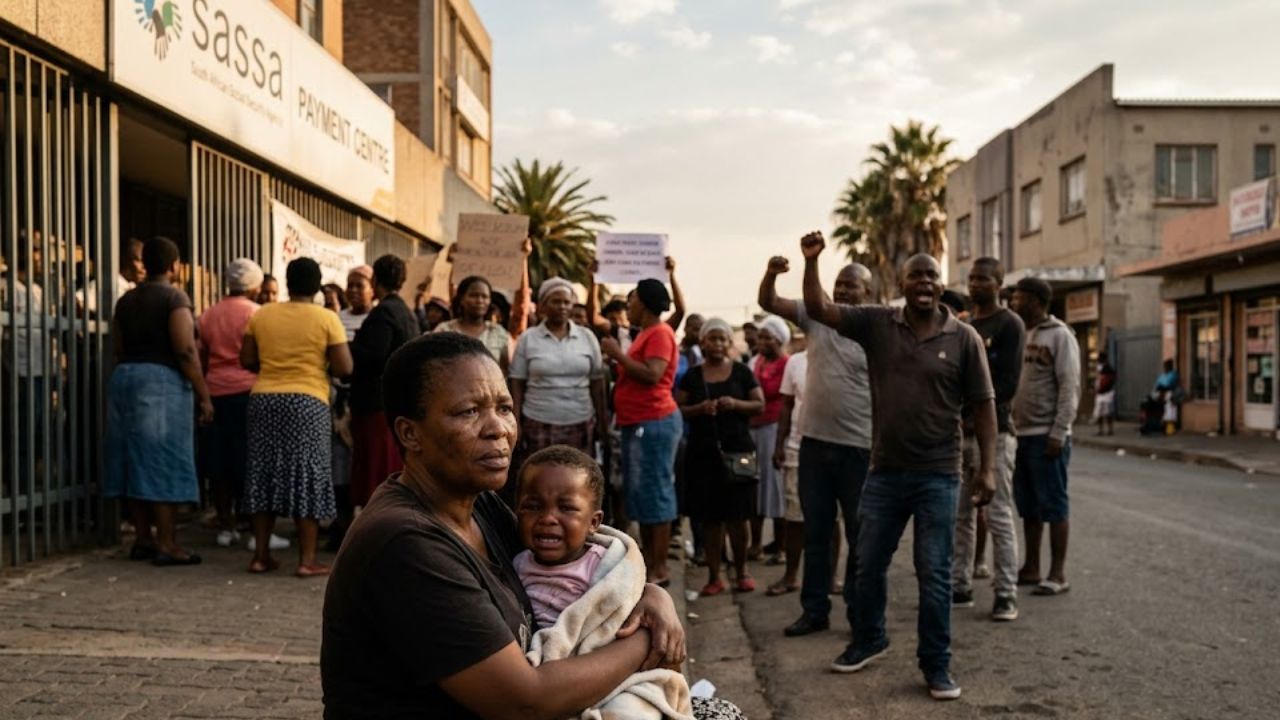
Low Grant Increases Add to the Problem
The payment delay has come at the same time as concerns over smaller-than-expected grant increases announced in the 2026 Budget Speech by Finance Minister Enoch Godongwana.
The increases were linked to the government’s projected annual inflation rate of 3.4%, but many civil society groups say these adjustments are too small to meet the real cost of living.
Rising costs are already making matters worse. Electricity tariffs are expected to increase by 8.8%, with further municipal increases likely in July 2026. In addition, fuel price hikes are expected to put even more pressure on food and transport costs.
Many believe these combined increases will quickly cancel out the benefit of the new grant adjustments.
SASSA Children’s Grants Amounts for April 2026
The official grant increases for April 2026 are as follows:
| Grant Type | Previous Amount | Increase | New Amount |
|---|---|---|---|
| Child Support Grant | R560 | R20 | R580 |
| Foster Child Grant | R1 250 | R40 | R1 290 |
| Care Dependency Grant | R2 320 | R80 | R2 400 |
Comparisons With Previous Years
Last year, grant increases were 4.8%, which was higher than the adjustments announced for 2026.
At the time, government had considered increasing VAT to help fund social spending, but that proposal was later rejected by Parliament.
At the same time, SASSA has reportedly intensified grant review processes in an effort to recover funds and reduce spending. The agency is aiming to save R2 billion in the current financial year and a further R1 billion in 2027/28.
What You Need to Know Before Applying for Child Support
For parents or guardians planning to apply for a Child Support Grant for the first time, the most important step is to register the child with the Department of Home Affairs as soon as possible after birth.
If a child qualifies, the government may provide support until the child turns 18. Over time, that support can amount to a substantial total value when adjusted for annual increases.
Who Can Apply for Foster Child and Care Dependency Grants
The Foster Child Grant is only available to a person who has been officially appointed as a foster parent by the court.
The Care Dependency Grant is intended for children under the age of 18 who have a disability. To qualify, the child must be assessed by a state-approved doctor, who will determine whether the disability is temporary or permanent.
These grants are also subject to qualifying conditions, including income rules where applicable.
Income Limits for SASSA Children’s Grants in April 2026
To qualify for a Child Support Grant, applicants must meet the following income thresholds:
| Applicant Status | Monthly Income Limit | Annual Income Limit |
|---|---|---|
| Single | R5 600 | R67 200 |
| Married | R11 191 | R134 292 |
Although SASSA states that applications can sometimes be processed on the same day, many applicants report that approval often takes up to three months.
If an application is approved, payment is usually backdated to the date on which the application was first submitted.
Documents Required When Applying
Applicants should make sure they take all required documents with them to avoid delays or being asked to return later.
You will generally need the following:
- Valid identity documents for yourself, your child, and your spouse if married
- Birth certificate of the child
- Proof of marital status, such as a marriage certificate or the birth/death certificate of a spouse
- Proof of income for both you and your spouse
- Certified bank statement for the last three months
- Proof of address, such as a utility bill not older than three months
How to Contact SASSA for Help
Queues at SASSA offices can be long, so it may be easier to first try one of the official contact channels below:
| Contact Method | Details |
|---|---|
| Toll-Free Call Centre | 0800 60 10 11 |
| SASSA Head Office | 012 400 2322 |
| [email protected] |
Final Word
The delay in SASSA Children’s Grants for April 2026 has created unnecessary hardship for millions of South African families, especially with the Easter long weekend falling before the revised payment date.
At the same time, the modest grant increases announced for the new financial year are unlikely to offer real relief in the face of rising electricity, fuel, and living costs.
For beneficiaries already struggling to make ends meet, the late payment schedule could not have come at a worse time.