A Level 2 storm warning has put South Africa on high alert, and emergency services have taken extra precautions in many areas. Forecasts say that severe weather is on the way, with strong winds, heavy rain, and possible flooding. Officials are telling people to stay alert. This situation shows how well the country is prepared and how important it is to respond quickly to natural disasters. As the threat of the storm grows, communities, local governments, and disaster management teams are now working together to lower risks and keep people safe.
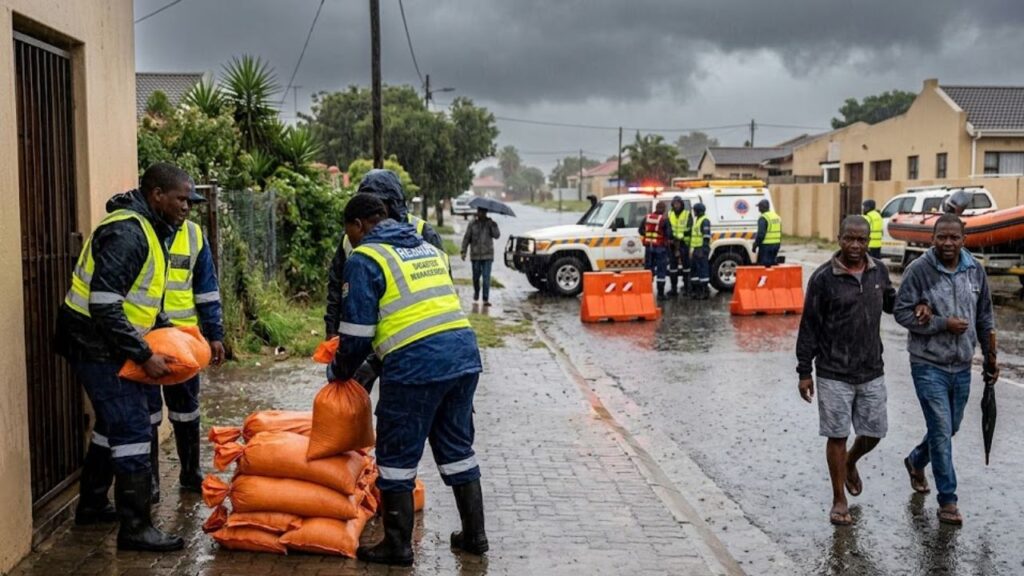
Level 2 Storm Warning Triggers Nationwide Emergency Response
Emergency teams all over South Africa have quickly responded to the Level 2 storm warning. Officials have put “rapid response teams” into action so that rescue operations can be set up quickly if things get worse. Authorities are also paying attention to “public safety alerts” to keep people up to date in real time. Local governments have started to strengthen their “storm preparedness plans,” especially in coastal and low-lying areas that are at high risk. Officials want to protect lives and reduce damage by using weather monitoring systems to keep an eye on things all the time. During this important time, residents are asked to stay up to date with official news and avoid unnecessary travel.
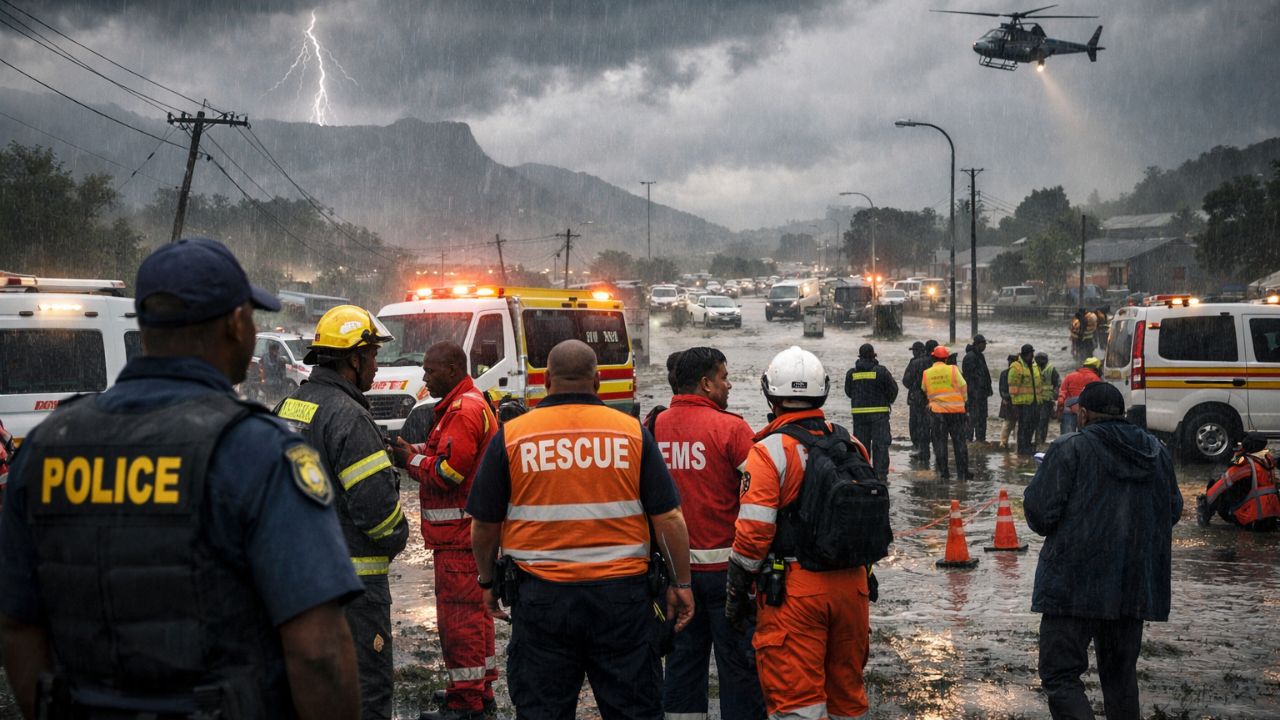
Bad Weather Conditions Expected in Different Parts of South Africa
Meteorological agencies have said that the storm could cause very bad weather in some parts of South Africa. Forecasts show that there will be “heavy rainfall zones” that could cause flooding in areas that are already at risk. Strong wind gusts could also make travel difficult and damage buildings. Coastal areas are especially at risk of “rough sea conditions,” which can be dangerous for fishermen and other marine activities. As storms get worse, officials are also getting ready for possible power outages. People are told to lock their doors, stock up on necessities, and stay inside as much as possible during the storm to stay safe.
Emergency services in South Africa are on high alert as the storm approaches. Teams are working together to make sure that disaster management units can respond quickly to any problems. Hospitals and medical staff are ready to help in case of an emergency. Flood rescue equipment is available to rescue crews to help them deal with water-related emergencies. Communication centers are also giving both responders and the public “constant situation updates” to help them. These actions show that people are taking a proactive approach to keep people safe and make sure that help gets to the affected areas as soon as possible.
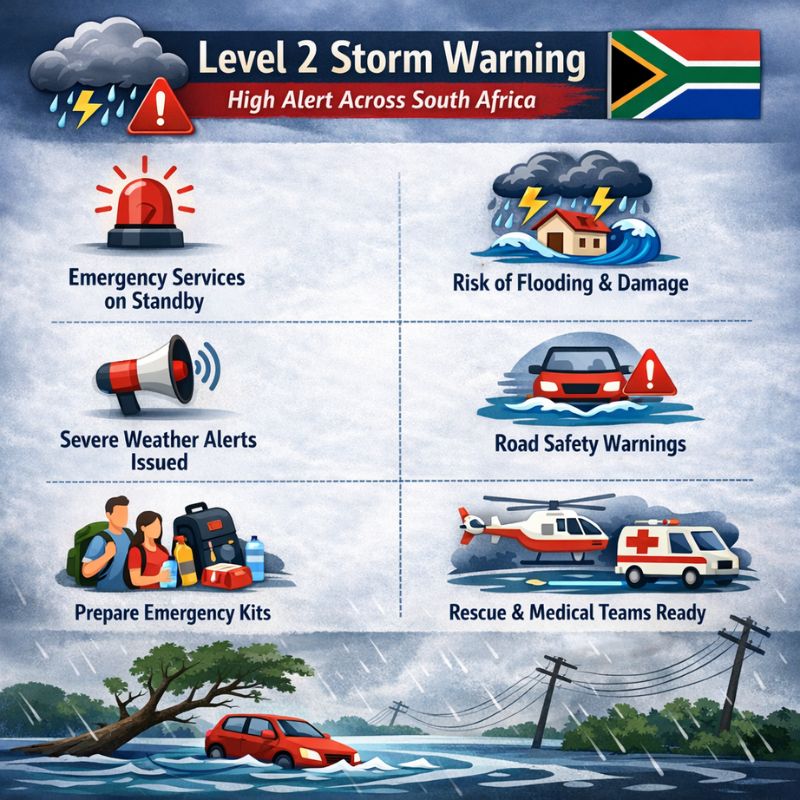
Storm Warning: Effects and Readiness Study
The Level 2 storm warning in South Africa shows how important it is to be ready and work together during bad weather. Early warning systems are helping government agencies and communities to predict risks and respond in the best way possible. Public awareness campaigns stress “community safety measures,” which encourage people to look out for themselves. The situation also shows how important “infrastructure resilience planning” is for preventing long-term damage. Overall, the work of both the government and the people shows that they are committed to “risk reduction strategies,” which will help the country stay strong in the face of natural disasters. 1.
| Alert Level | Expected Impact | Preparedness Action |
|---|---|---|
| Level 1 | Minor disruptions | Monitor updates |
| Level 2 | Moderate risks | Activate emergency teams |
Frequently Asked Questions (FAQs)
1. What does it mean when there is a Level 2 storm warning?
It means that the risk level is moderate, so you need to be ready and pay attention.
2. What parts of South Africa are most affected?

Storms and floods usually hit coastal and low-lying areas harder.
3. What should people do when there is a storm warning?
They should stay up to date, protect their property, and avoid travelling when they don’t have to.
4. Are emergency services ready for anything?
Yes, emergency teams are on high alert and ready to deal with any problems that come up.